

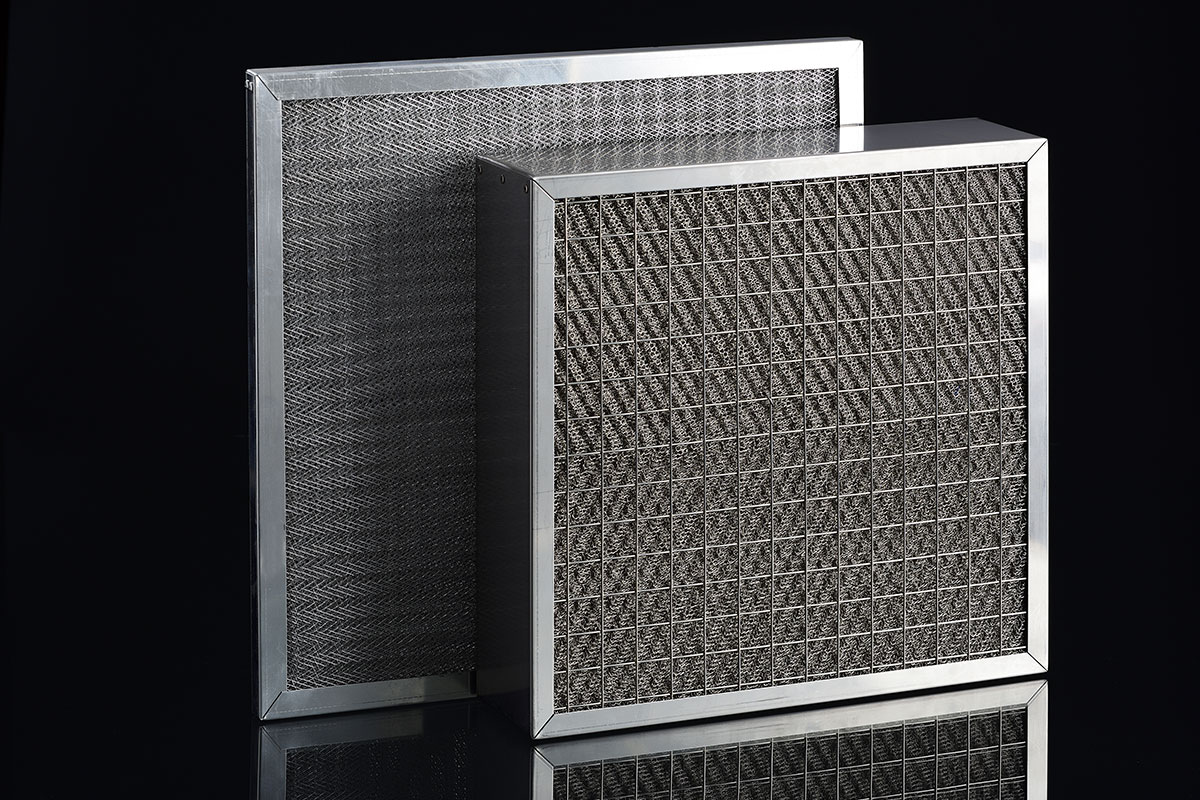
Whether you’re filtering liquid, gas or particles, it’s important to determine the difference between depth filtration and screen filtration to decide which method would be best for your application and goals.
Getting the filtration method right also helps to prevent damage in any downstream processing equipment.
What is Screen Filtration?
Screen filtration is a single layer of filter media with a specific pore size dependent upon the particles being filtered from the stream.
Common screen filtration media includes:
- Woven mesh
- Perforated metal
- Paper filters
- Membrane filters
How screen filtration works:
Particles are captured on the surface of the filter media, with pore size determining the efficiency of the process. The screen will eventually become clogged, decreasing flow and causing pressure drop if applicable.
Advantages of screen filtration:
- Precise particle size control
- Predictable filtration rating
- Simple construction
- Easy inspection of captured debris
- Effective for low contamination loads
Limitations of screen filtration:
- Rapid clogging as particles build up on the surface
- Increased pressure drop during operation
- Limited dirt load capacity
- Reduced performance under variable flow conditions
- Less effective for liquids, aerosols or oil mist
What is Depth Filtration?
Depth filtration is a three-dimensional approach with several layers of media capturing droplets throughout, rather than one screen layer.
Common filter media in depth filtration:
- Knitted wire mesh
- Non-woven fibre media
- Foam filters
- Sintered fibre structures
How depth filtration works:
Depth filtration relies on a combination of mechanisms such as inertial impaction, interception, diffusion and coalescence (for liquids and mists). Particles are captured at various levels throughout the filter media, allowing the filter to handle far more contaminants before performance is affected.
Advantages of depth filtration:
- High dirt loading capacity
- Stable pressure drop over time
- Improved performance over flow fluctuation
- Excellent for mist, aerosol and liquid separation
- Longer service life
- Greater tolerance to vibration and shock
Limitations of depth filtration:
- Less precise particle size cut-off
- Harder to visually inspect contamination
- Performance depends on media density and structure
- May require application specific design
|
Feature |
Depth Filtration |
Screen Filtration |
|
Filtration method |
Captures particles throughout media |
Captrures particles on surface |
|
Dirt holding capacity |
High |
Low to moderate |
|
Pressure drop over time |
Stable |
Increases rapidly |
|
Particle size control |
Broad |
Precise |
|
Mist/droplet separation |
Excellent |
Poor |
|
Resistance to clogging |
High |
Poor |
|
Maintenance interval |
Longer |
Shorter |
Typical applications for each method
Screen filtration:
- Particle size classification
- Low contamination system
- Clean fluids or gases
- Pre-filtration in controlled environments
- Applications requiring precise cut-off sizes
Depth filtration:
- Oil mist elimination
- Crankcase ventilation systems
- Gas and vapor separation
- High-flow systems
- Environments with varying contamination loads
- Automotive and heavy-duty exhaust-related filtration
If depth filtration sounds like the right product for your requirements, contact us today to see how we can help with finding you a solution.
